Children
Child Parliament
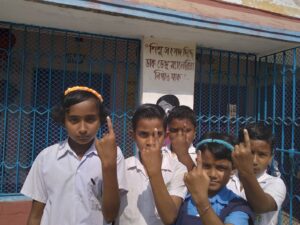
Child Parliament model is a structured platform that enables children to practice leadership, communication and collective decision-making. Through elections, meetings and student-led initiatives, children learn to identify issues, collaborate with peers and engage constructively with teachers and communities.
Life skills sessions are integrated with discussions on respect, equality, empathy and gender justice, helping children question stereotypes, build healthy relationships and develop inclusive attitudes. Digital literacy sessions further help children critically understand media influence, online behaviour and peer pressure in digital spaces.
The programme also works with teachers and parents to promote gender-sensitive, supportive and non-violent environments that reinforce children’s learning in both school and home settings.
Encouraging children to embrace values of equality, rights, diversity and democracy
Key Achievements
- Child Parliaments established in 22 primary schools, with 465 children elected through a democratic process—53% of them girls.
- 1,350+ children reached every year, creating sustained platforms for participation, leadership, and civic learning.
- Nutrition and care in action: 182 children and 65 youth maintain nutrition gardens across 9 schools and 94 households, strengthening food awareness and collective responsibility.
- Children influencing governance: 475+ children present their priorities directly to Panchayats through Bal Sansad Sabhas.
- Model scaled through public systems: Inspired by successful Child Parliaments in Thiba and Kirnahar II, Bara Sawta Gram Panchayat conducted its own Bal Sansad, gathered 32 child-focused plans, and committed to becoming a child-friendly Panchayat.
Enabling and improved ecosystem around women and children by creating inclusive practices among GPs & institutions to particularly around rights, safety and protection.
Strategies
Engaging in a dialogue with male political leadership and elected representatives regarding impact of patriarchy and the role that gender equitable governance could play in catalyzing social development.
Preparing the political machine and system to accept, seek and support active women leaders, promote women’s issues through Gender Responsive Budgeting and gender mainstreaming within political party structures.
Key Achievements | Sustainable Livelihoods & Enterprises
- For the first time, children under 18 were given space to speak and be heard in official Gram Sansad Sabhas, strengthening inclusive local democracy.
- Measurable shift in public spending priorities: Between 2016 and 2023–24, budget allocation for women and child development increased from 3.58% to 5.89% across four Gram Panchayats, alongside a 6.2% rise in gender integration across all sub-committees.
- Gender-responsive planning translated into action: Community demands shaped GP annual action plans—resulting in 205 street lights installed, police patrolling in violence hotspots, women’s toilets, change rooms, breastfeeding spaces, children’s parks, kitchen gardens, nurseries, and awareness camps.
- Community ownership of gender equality: Samyo Mela, a community-led gender equality fair, brings together 575+ volunteers annually and shared budget—youth, women, teachers, and local leaders—to make gender justice a visible, shared public agenda.
Join our mission. Volunteer, Donate, Advocate. Get Started Today.
Email: equidiversity@gmail.com
Call: +91 98306 70388